Best AI SEO Tools 2026: 8 Top Platforms Ranked & Compared


The best AI SEO tools for 2026 add three things legacy rank trackers never had: AI Overview and LLM citation tracking for platforms like ChatGPT and Perplexity, content briefs built from live SERP data, and automated reporting that skips manual data pulls. This roundup ranks eight platforms, from full suites like Semrush and Ahrefs to specialized optimizers like Surfer SEO and Frase, cross-checking each vendor’s own pricing page against G2 ratings and real user complaints on migrations and support.
Newer entrants such as Rankability, Scalenut, Search Atlas, and Yext are also building out similar AI-visibility features, but the eight tools below currently have the independent review volume needed for a rigorous side-by-side comparison.
| Tool | Best For | Starting Price (billed monthly) | Standout Feature |
|---|---|---|---|
| Semrush | Full marketing suites needing SEO, PPC, and social in one place | $139/mo (SEO); AI tracking from $99/mo standalone or $199/mo bundled | AI Copilot across the full toolset |
| Ahrefs | Link building and technical research | $129/mo (Lite) | Backlink index reviewers rate highly |
| SE Ranking | Value-focused teams and agencies | $129/mo (Core); $103.20/mo billed annually | SEO and GEO tracking in one plan |
| Writesonic | AI content plus AI search visibility | $99/mo (Starter); $79/mo billed annually | Tracks brand mentions in ChatGPT, Gemini, and AI Overviews |
| Surfer SEO | Real-time on-page content optimization | $95/mo (AI Search Analytics); $119/mo (Standard) | Content Editor scoring plus AI visibility tracking |
| Frase | Freelancers and small teams on a budget | $49/mo (Starter); $39/mo billed annually | Briefs, AI writing, and SEO plus GEO scoring |
| AirOps | Large content ops teams running AI pipelines | Custom, sales-led | Repeatable, multi-step AI content workflows |
| Clearscope | Editorial teams needing topic coverage | $129/mo (Essentials) | Enterprise-grade content intelligence |
What Actually Makes an SEO Tool ‘AI-Powered’ in 2026?
An SEO tool earns a real “AI-powered” label in 2026 by doing three things older rank trackers never touched: tracking whether ChatGPT, Perplexity, and Google’s AI Overviews cite a given page, generating content briefs from live SERP data instead of static keyword lists, and automating reporting without manual data pulls. That distinction is what separates the best ai seo tools 2026 has to offer from legacy platforms that simply bolted on a chatbot.
LLM citation tracking now matters as much as backlink analysis tool depth once did, which is why platforms like Search Atlas and Yext have added AI-visibility monitoring alongside their existing rank tracking software. NLP content scoring, the backbone of most AI content optimization tools, is only as good as the model generating the draft, and how underlying AI models differ in output quality explains why two tools can score the same content differently despite similar topic cluster mapping features.
The 8 Best AI SEO Tools in 2026, Compared
Choosing among these eight platforms means matching each one’s core strength to your workflow, not its feature count. The table below lines up pricing tier, standout AI capability, and G2 rating, pulled directly from each product’s G2 review page as of August 2026, starting with Semrush’s listing, so you can shortlist before reading the full breakdowns.
| Tool | Best For | Pricing Tier (Publicly Listed) | Standout AI Feature | G2 Rating (as of August 2026) |
|---|---|---|---|---|
| Semrush | Full marketing teams needing SEO, PPC, and social in one suite | Premium, multi-tool suite pricing | AI Copilot across the full marketing stack, plus Semrush One’s AI Overview and LLM citation tracking | 4.4/5 (4,000+ reviews) |
| Ahrefs | Link building and technical research | Premium, usage-based tiers | Backlink analysis tool with an index reviewers say surfaces links others miss | 4.5/5 (700+ reviews) |
| SE Ranking | Budget-conscious teams that don’t need Ahrefs-level backlink depth | Lower cost than Semrush for comparable crawl and project limits | SEO automation software with rank tracking built in | 4.7/5 (1,500+ reviews) |
| Writesonic | Teams tracking visibility inside ChatGPT and Perplexity answers | Credit-based mid-tier plans | AI Overview tracking and LLM citation tracking | 4.7/5 (2,000+ reviews) |
| Surfer SEO | Real-time content scoring against ranking pages | Mid-to-premium content optimization pricing | NLP content scoring plus 2026 AI-citation tracking for generative engine optimization | 4.8/5 (500+ reviews) |
| Frase | Freelancers and small teams wanting briefs plus writing in one place | Budget-friendly alternative to Surfer and Clearscope | Content brief generation paired with an AI-powered content writer | 4.8/5 (300+ reviews) |
| AirOps | Large content ops teams running repeatable pipelines | Custom, sales-led pricing | Multi-step AI content pipeline automation | 4.6/5 (100+ reviews) |
| Clearscope | Editorial teams needing topic cluster mapping over granular scoring | Premium, enterprise-oriented pricing | NLP content scoring for comprehensive topic coverage | 4.9/5 (90+ reviews) |
Clearscope’s 4.9/5 G2 rating is the highest of the eight, though SE Ranking’s 4.7/5 across 1,500+ reviews reflects a broader base of validated feedback.
01. Semrush One
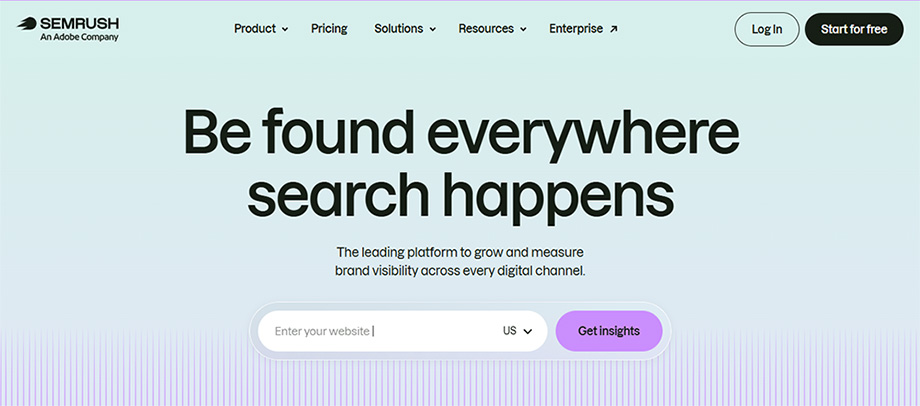
Semrush One adds AI Overview tracking and brand-visibility monitoring to the existing Semrush stack, flagging when a domain gets cited inside Google’s AI Overviews or referenced by ChatGPT and Perplexity for target queries. It layers NLP content scoring and topic cluster mapping onto the keyword research workflow, useful for teams already living inside Semrush rather than adding a separate tool. Semrush’s plans sit at the premium end of this comparison, reflecting the size of the full marketing suite rather than SEO features alone.
Independent complaints on G2 center on interface size: reviewers describe a learning curve steep enough that smaller teams use only a fraction of what they pay for. A G2 reviewer on the Semrush review page also notes AI Overview citation data lagging real SERP changes by a day or more.
Pricing (checked October 22, 2026): Semrush’s SEO plan costs $139/month ($117.33 billed annually) but does not include AI tracking. AI visibility starts with the SEO + AI Starter plan at $199/month, or the standalone AI Visibility plan at $99/month per domain with 25 daily prompts.
Pros
- AI Overview and LLM citation tracking built into the same dashboard as rank tracking
- Deep keyword research and backlink data already native to the platform
- Useful for teams that want SEO, content, and visibility tracking under one login
Cons
- Interface complexity reportedly overwhelms smaller teams, per G2 reviews
- AI citation data can lag real SERP movement, per a G2 reviewer
- Full value requires tapping features well beyond core SEO, which not every buyer needs
02. Ahrefs
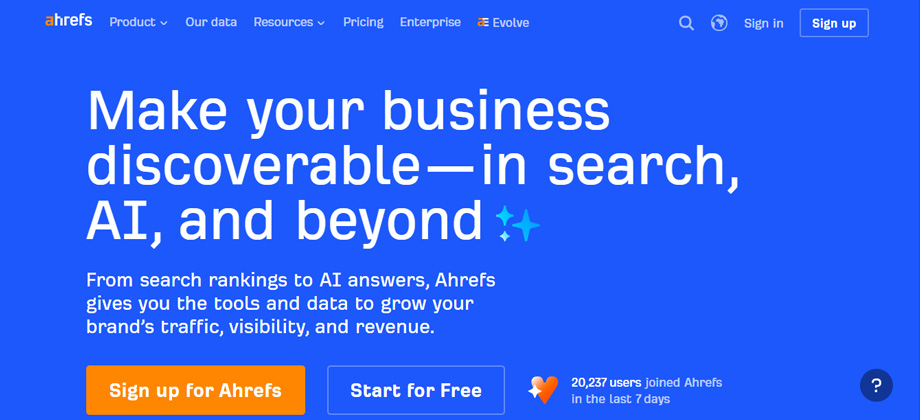
Ahrefs built its reputation on backlink data, and that’s still what independent reviewers cite most often when justifying the cost. Its Site Explorer and Content Explorer modules now layer AI-assisted topic clustering and keyword grouping on top of that link index, which speeds up the research phase of any keyword research workflow without replacing the manual judgment link building still requires.
The AI Content Helper adds NLP content scoring and brief generation, but reviewers on G2 rate this piece as noticeably thinner than dedicated content optimization tools. Community feedback echoes that gap, with users describing Ahrefs as the tool they keep for backlink analysis while running drafts through a separate optimizer.
Pricing (checked October 22, 2026): Lite costs $129/month, Standard $249/month, and Advanced $449/month. Higher tiers include more tracked AI prompt checks and Brand Radar data.
Pros
- Backlink index reviewers consistently call the most comprehensive available
- Fast, reliable rank tracking software with minimal reported downtime
- Content Explorer surfaces topic clusters competitors already rank for
Cons
- AI content scoring lags behind dedicated optimization platforms
- No AI Overview or LLM citation tracking as of this writing
- Users on G2 note the learning curve for advanced filters is steep
03. SE Ranking
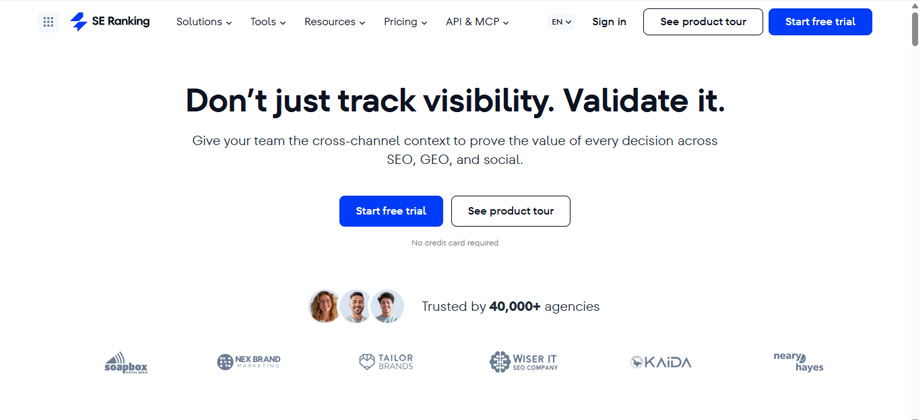
SE Ranking posts the highest G2 score of the three all-in-one suites at 4.7 out of 5 across 1,500+ reviews, and the reason shows up in the plan limits, not the feature list. Its AI tools cover keyword research workflow automation, content brief generation, and rank tracking software with white-label reporting, matching most of what Semrush One offers at a noticeably lower monthly cost.
The tradeoff is scale. Independent reviewers note SE Ranking’s backlink index and historical data are thinner than Ahrefs or Semrush, so link-heavy audits can miss sites the bigger crawlers catch. For agencies managing many client sites on tighter margins, that’s usually an acceptable trade for the pricing advantage.
Pricing (checked October 22, 2026): Core costs $129/month ($103.20 billed annually) and includes SEO and GEO tracking; Growth costs $279/month.
Pros
- Highest G2 satisfaction score among the three all-in-one suites
- Lower cost per project and crawl limit than Semrush
- White-label reporting built in for agency client work
Cons
- Smaller backlink and keyword database than Ahrefs or Semrush
- Less useful for teams needing deep historical link data
- AI features lag behind Semrush’s Copilot in scope
04. Writesonic
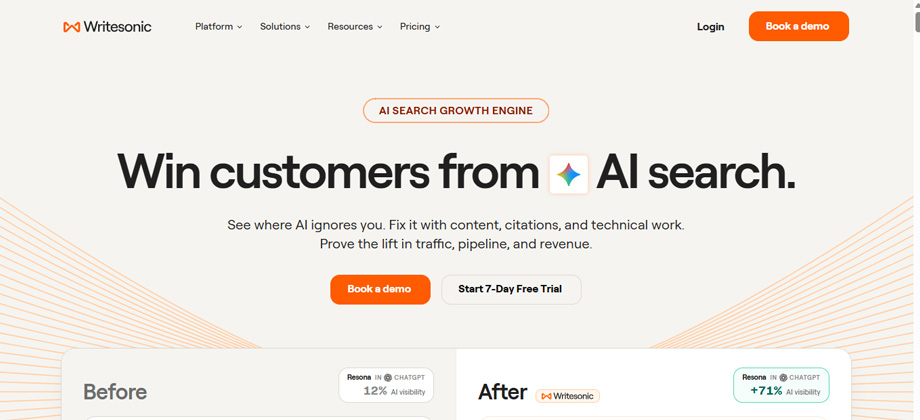
Writesonic has grown from an AI writing tool into a combined content and AI-visibility platform, pairing content brief generation with LLM citation tracking across ChatGPT and Perplexity. That combination puts it closer to a lighter, cheaper alternative to Surfer or Clearscope for teams that want AI Overview tracking bundled in rather than bought as a separate add-on.
It holds a G2 rating of 4.7 out of 5 across more than 2,000+ reviews, which reflects genuine satisfaction with the writing and optimization workflow. The recurring complaint in those same reviews is a credit system reviewers describe as confusing, where generating briefs, articles, and visibility reports can burn through allowances faster than expected.
Pricing (checked October 22, 2026): Starter costs $99/month, or $79/month billed annually, and tracks 50 prompts daily across ChatGPT, Gemini, and Google AI Overviews, with 15 AI articles a month.
Pros
- Content brief generation and AI-powered content writer in one workflow
- LLM citation tracking covers both ChatGPT and Perplexity, not just Google
- A large base of G2 reviews to learn from
- Generally cheaper entry point than Surfer or Clearscope for similar output
Cons
- Credit-based pricing structure that reviewers call hard to predict
- NLP content scoring less granular than dedicated optimization tools
- Heavier upgrade path once teams outgrow starter credit allowances
05. Surfer SEO
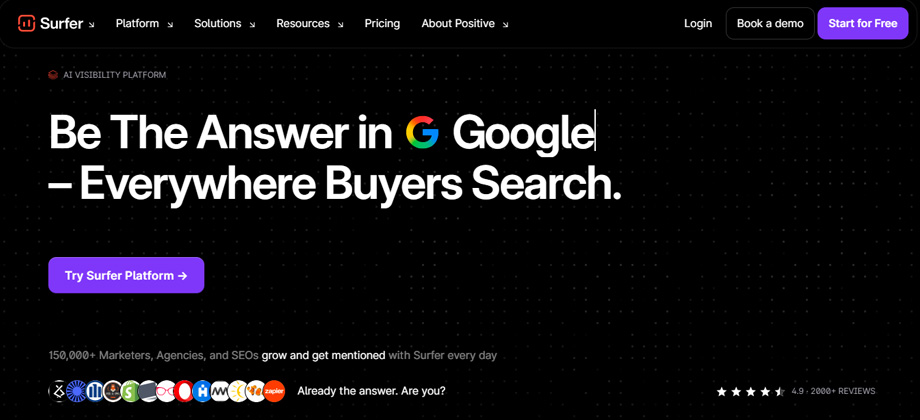
Surfer SEO is one of the highest-rated content optimization tools on G2 in this roundup, just behind Clearscope, and its Content Editor is the reason reviewers keep recommending it for teams that write at volume. It scores drafts against top-ranking pages in real time using NLP content scoring, and its 2026 addition of AI-citation tracking now flags whether ChatGPT and Perplexity reference a page, extending the tool into generative engine optimization territory rather than staying purely on-page.
It fits best as a companion to a keyword research workflow tool rather than a replacement for one, since Surfer’s own keyword data is thinner than Semrush’s or Ahrefs’s.
Pricing (checked October 22, 2026): AI Search Analytics costs $95/month ($82 billed annually) for 50 tracked AI prompts; Standard, which adds the content tools, costs $119/month ($99 billed annually).
Pros
- Real-time content scoring against live SERP data, not a static checklist
- AI-citation tracking adds visibility into ChatGPT and Perplexity mentions
- Highest independent G2 rating of the content optimization group
- Integrates content briefs directly into the editing workflow
Cons
- Keyword and backlink data are shallow compared to full suites like Ahrefs
- Per-article or per-credit pricing can get expensive at high content volume
- Less useful for teams needing topic cluster mapping across a full site
06. Frase
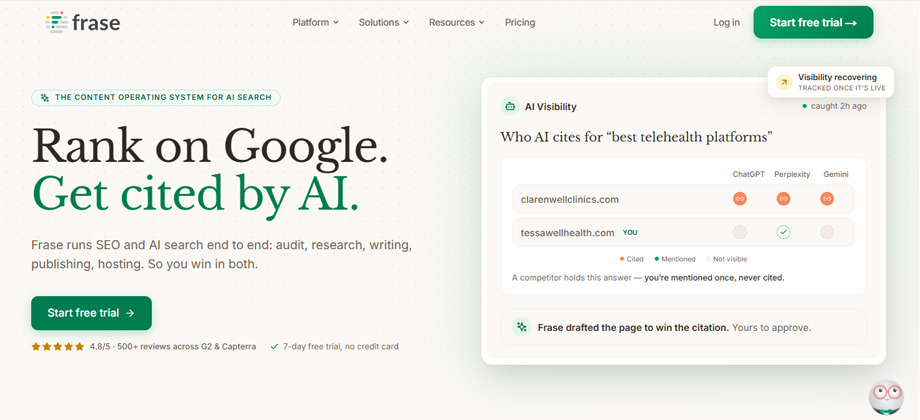
Frase positions itself as the budget alternative to Surfer and Clearscope, bundling content brief generation, an AI writer, and NLP content scoring into one subscription instead of separate tools. G2 reviewers give it 4.8 out of 5 across 300+ reviews, matching Clearscope’s reputation for accuracy while undercutting it on price.
It suits freelancers and small teams who need topic cluster mapping and a keyword research workflow without paying for Surfer-level volume features. Users switching between content tools often describe Frase as the practical choice once they’ve outgrown manual outlines but don’t need enterprise reporting.
Pricing (checked October 22, 2026): Starter costs $49/month, or $39/month billed annually, for one site, with AI visibility on ChatGPT and Google AI and a free 7-day trial.
Pros
- Lower entry price than Surfer or Clearscope for similar core scoring
- Content briefs and AI drafting live in the same workspace
- Simple interface that new writers pick up quickly
Cons
- Smaller content database than Surfer or Semrush One
- No dedicated LLM citation tracking for ChatGPT or Perplexity
- Some users report the AI writer output needs heavier editing than competitors
07. AirOps
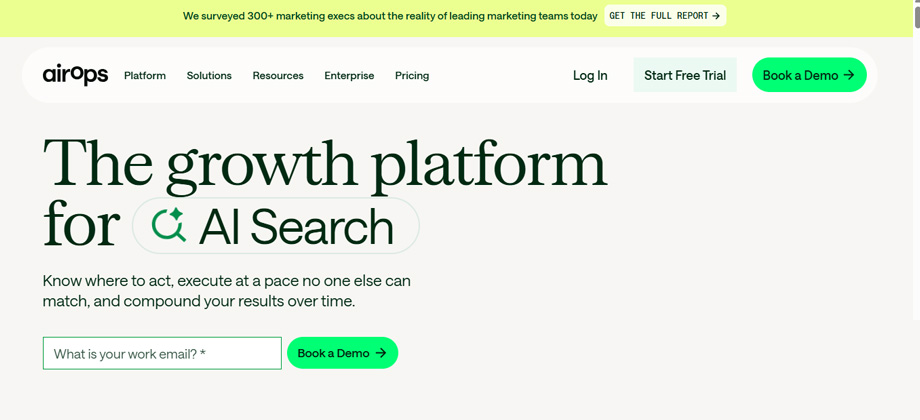
AirOps targets content ops teams building repeatable, multi-step AI pipelines, not someone hunting for the best AI for SEO writing on a single article. G2 reviewers rate it 4.6 out of 5 across 100+ reviews, reflecting strong marks from teams automating briefs, drafts, and publishing across dozens of pages at once.
The entry tier lists at $200/month but omits the pipeline builder and automated publishing workflow that define AirOps’ actual use case. AirOps’ pricing page does not publicly list the cost of the tier that includes full pipeline automation, so buyers have to request a quote. That gap makes it a weak fit for solo writers, and a stronger case for agencies running content at scale.
Pricing (checked October 22, 2026): AirOps now sells through sales-led enterprise contracts and doesn’t publish self-serve prices, so expect a demo before you can buy.
Pros
- Handles complex, multi-step content pipelines other AI writers can’t automate
- Strong G2 rating from teams running high-volume content operations
- Flexible pipeline building for briefs, drafts, and publishing in one flow
Cons
- Entry-level tier omits the pipeline builder and publishing automation that justify the product
- Higher-tier pricing isn’t public, requiring a sales quote
- Overkill for solo users or small teams needing simple AI SEO writing
08. Clearscope
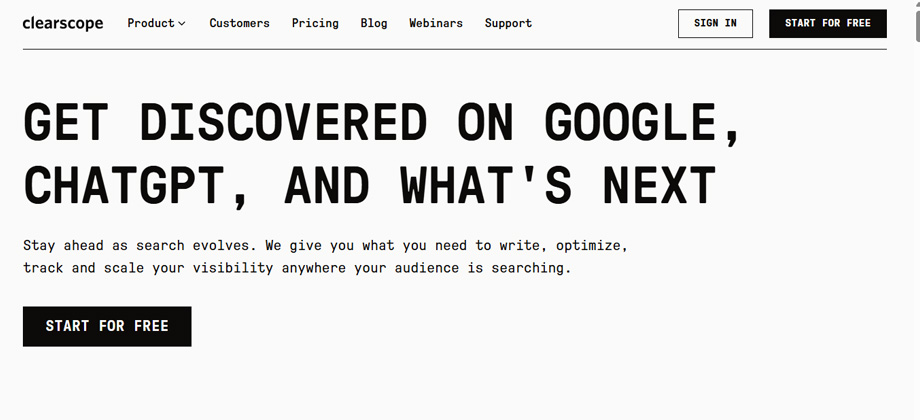
Clearscope takes a narrower approach than the other content tools in this roundup, scoring topic and entity coverage rather than giving a real-time draft score. A typical report for an SEO-focused article lists target entities such as “schema markup,” “canonical tags,” and “Core Web Vitals,” flagging which ones top-ranking competitors mention that the draft doesn’t. That format suits editorial teams with an established review process more than solo writers iterating draft by draft.
G2 reviewers rate it 4.9 out of 5 across 92 reviews, the highest average among the three content optimization tools compared here (Surfer SEO and Frase both sit at 4.8/5), though its review count is far smaller than either. Writesonic’s 4.7/5 across 2,000+ reviews reflects a different tool category and scale, not a competing claim on this specific metric. Weigh that smaller sample before treating Clearscope’s score as decisive for high-volume production.
Pricing (checked October 22, 2026): Essentials costs $129/month and Business $399/month, with a 14-day free trial and no contracts.
Pros
- Highest G2 rating among content optimization tools at 4.9/5
- Detailed entity and topic coverage reporting for editorial teams
- Straightforward reports that non-SEO writers can act on without training
Cons
- Smaller review base (92) than Surfer SEO or Frase, limiting how much can be inferred
- Less real-time, granular scoring during drafting compared to Surfer SEO’s editor
- No built-in LLM citation tracking for ChatGPT or Perplexity mentions
How to Choose the Right AI SEO Tool for Your Team
Start with three questions, not a feature checklist: how many people will use the tool, what’s the monthly budget, and does anyone need to track citations inside ChatGPT and Perplexity answers. Those three answers eliminate most of the eight platforms above faster than any comparison table.
Solo operators and small teams with tight budgets should weigh entry-tier suites like SE Ranking or Frase against a full-featured platform before committing to enterprise pricing. Teams where generative engine optimization is now a stated KPI need a platform with real LLM citation tracking, not a roadmap promise, since that’s a newer capability and adoption varies by vendor. If that’s your situation, our best LLM SEO tools comparison breaks down dedicated AI visibility trackers like Otterly.AI, Peec AI, and AthenaHQ by price per tracked prompt. Larger teams juggling content pipelines, technical audits, and reporting across multiple clients or brands justify the higher cost of a full suite or an ops-focused platform like AirOps.
If none of the eight fit cleanly, niche options like Rankability and Scalenut cover narrower use cases (rank tracking automation and budget-friendly AI drafting, respectively) worth a look before committing budget to one of the best ai seo tools 2026 has to offer at full price. A much wider field of cheaper, newer AI writers has also popped up chasing SEO, AEO, and GEO all at once, but how well they’re actually reviewed varies a lot from one to the next. Before trusting one with client work or your own content pipeline, it’s worth a quick gut-check: pull up the tool’s G2 or Trustpilot page yourself and see if real people are actually vouching for it.
Best AI SEO Tools 2026: Frequently Asked Questions
Which tool tracks ChatGPT and Perplexity citations?
Semrush One, Writesonic, and Surfer SEO all added LLM citation tracking for ChatGPT and Perplexity during 2026, tracking whether a domain gets referenced in AI-generated answers. This falls under generative engine optimization rather than traditional rank tracking, and it’s a newer category, so coverage depth and update frequency still vary by vendor.
What is GEO (Generative Engine Optimization)?
GEO means getting AI tools like ChatGPT, Perplexity, and Google’s AI Overviews to actually mention or link to your content when they answer someone’s question , instead of just chasing a spot in the regular search results list. It still leans on the same basics as SEO (clear writing, real authority, good structure), but the win condition is different: did the AI’s answer name you as a source, not just did you rank #3.
What’s the difference between SEO, AEO, and GEO?
SEO is the classic game: rank higher in Google’s list of blue links. AEO (Answer Engine Optimization) is about winning the direct answer box , think featured snippets or a voice assistant reading your answer out loud. GEO is the newest layer, focused on getting cited inside AI-generated answers from tools like ChatGPT or AI Overviews. They overlap a lot in practice , good content tends to help with all three , but each one is optimizing for a slightly different moment where someone actually sees your brand.
How is optimizing for AI Overviews different from regular SEO?
Regular SEO is playing for position in a scrollable list of results. AI Overviews are a single summary sitting above that list, and only a few sources make the cut to get quoted or linked. That changes what works: short, direct answers to specific questions tend to get pulled into an AI Overview more than content built mainly around keyword repetition or link-building.
Can I actually check if ChatGPT is mentioning my brand?
Yes , that’s what LLM citation tracking does, and it’s one of the features that separates 2026’s AI SEO tools from older rank trackers. As covered above, Semrush One, Writesonic, and Surfer SEO all watch whether your domain shows up inside ChatGPT and Perplexity answers, so you can spot where a competitor’s getting cited and you’re not.
Do I need a separate GEO tool, or does my current SEO tool already cover it?
Depends what you’re already using. Some tools in this guide , Semrush One, Writesonic, Surfer SEO , have built AI-citation tracking right into the same dashboard, so there’s nothing extra to buy. Others, like Ahrefs, Frase, and Clearscope, haven’t added it yet, so teams on those tend to bolt on a GEO-focused tool or feature separately instead of relying on the base product. We compare those dedicated options, with real prices and engine coverage, in our guide to the best LLM SEO tools for GEO and AEO tracking.
What’s the biggest mistake people make picking an AI SEO tool?
Choosing based on how many features a tool has, not how it actually fits your workflow. As the “How to Choose” section above gets into, a big full suite can sit mostly unused on a small team that only ever needed briefs and content scoring, while a narrow tool like Surfer or Frase can leave a growing team missing backlink or technical SEO depth down the line. Matching the tool to your team size, budget, and whether AI visibility is a real priority avoids both traps.
Leave a Reply